
Is George Group China Legit? A Buyer’s Guide to Its Teams

Buyer guide · George Group, Foshan George Group, also known as George Building, is a building-materials export group in Foshan, China, trading since 2006. It works as one company: specialist teams share one headquarters, one showroom and one price system. Many of those teams run their own website, which is why you will find the George name on so many sites. This guide explains how the teams work and how to confirm you are dealing with one of them. The short answer Is George Group legit? Yes. George Group has traded from Foshan since 2006 and runs a 25-floor headquarters on Jihua 3rd Road that buyers can visit or tour by video. As with any supplier, confirm the company named on your contract and the bank beneficiary before you pay. The checklist is below. Why are there so many George websites? Many of the group’s specialist teams run their own website for the markets and project types they focus on. All of them use the same group showroom, product range and company history, so the George name and the Foshan showroom appear on each. 2006 Trading since 25 Headquarters floors, Foshan 48,839 m² Showroom space 130+ Countries supplied By the GeorgeDeco Team George Deco is a flagship department within George Group, responsible for international business. Updated October 2026 01 · The group Who is George Group? George Group is a building-materials and furnishings export group in Foshan, Guangdong. It supplies complete projects from one place: homes and villas, apartments, hotels and commercial spaces. Names you may see for the same group include George Group, George Group China, George Building, 敬城国际 and Jingcheng International. George Deco (GeorgeDeco) is a flagship department within the group, responsible for international business. The core range covers eight categories: cabinetry and wardrobes, furniture, doors and windows, flooring and staircases, ceramic tiles, sanitary ware, lighting, and natural stone. Services include design, factory quality control, consolidation into one shipment, shipping up to DDP, installation guidance and after-sales support. In August 2026 the group moved into a 25-floor headquarters at No.46 Jihua 3rd Road, Chancheng District, Foshan. Floors 1 to 11 hold the design center, the product departments and their showrooms, some of which are still being fitted out. Higher floors hold the shared back office: logistics, quality inspection, finance and the technology team. Our floor-by-floor guide to the headquarters shows each level. The group employs more than 1,500 people and is led by its chairman, George. Our profile explains who George is and how he relates to George Group. Business registry details On China’s national registry, George Group’s operating company is 佛山市敬城信息科技有限公司, Unified Social Credit Code 91440604MA552A340K. You can search either at gsxt.gov.cn, China’s National Enterprise Credit Information Publicity System. Business registry snapshot Registered name 佛山市敬城信息科技有限公司敬城 (Jingcheng) is the Chinese name of George Group Unified Social Credit Code 91440604MA552A340K Legal representative 黎俊杰 (Li Junjie) Registered on 24 July 2020 Registered address 佛山市禅城区季华四路意美家卫浴陶瓷世界24栋二楼1号Jihua 4th Road, Chancheng District, Foshan The registered address is the group’s former premises on Jihua 4th Road, from before the August 2026 move to Jihua 3rd Road. The group has traded since 2006, and this operating company was registered in 2020. 02 · The websites Why does George Group (George Building) have so many websites? George Group serves buyers through specialist teams inside one company. Product teams focus on a category, such as tiles, stone, furniture, lighting or doors and windows. George Deco, the group’s flagship international business department, coordinates every category for overseas projects. Many teams run a website and social accounts for the markets and project types they specialize in, so buyers can reach the right specialists directly. That is why you will see the same showroom, product photos, company history and George name on many websites. They are group resources, and every team uses them. Each site adds its own team: the people who answer you, the markets they know and the projects they handle. In the wholesale districts around Foshan, such as Lecong for furniture, Shiwan for ceramics and nearby Guzhen for lighting, a buyer often coordinates dozens of separate sellers alone. George Group brings specialist teams for those categories into one headquarters, with one showroom, one back office and one set of standards, so a buyer can source a whole project in one place. Our earlier post, Why are there so many George accounts online?, gives the short answer. 03 · The model Why the team model is good for buyers and for the group The team set-up is deliberate. Our headquarters guide says the teams “maintain healthy internal competition while also working closely together.” For buyers, this brings four practical benefits. Teams compete on service, under one price system Every team draws on the same group product range, the same supply base and the same group price system, so teams do not compete on price. They compete on service: how fast they reply, how good their design proposals are, how well they manage an order and how they look after a client after delivery. Teams that serve buyers best win more projects, and the group grows with them. Good practice also spreads. When one team finds a better way to work, such as a clearer quotation format or a faster sample turnaround, other teams see the result and adopt it. That is how a group with many teams keeps raising its service standard as it grows. Specialists who know your products and project type A hotel fit-out needs different help from a single villa. Because teams specialize, you work with people who handle your product or project type every day. A stone team knows how slab size, finish and vein matching affect a hotel lobby floor. A project team brings tiles, doors, lighting and furniture together for a whole building. Teams that go deep on individual countries The group’s longer-term direction is for teams to go deep on particular countries. A project abroad involves more than products: voltage and plug types for lighting, door and window ratings for the
Inside George Group: How Our New 25-Story Headquarters Actually Works

Discover how George Group operates inside its new 25-story headquarters, where multiple departments, showrooms, and teams work together to deliver one-stop building material solutions for global projects.
Who Is George? And What Is the Relationship Between George and George Group?
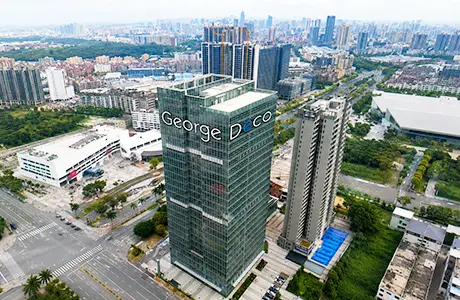
Learn who George is, the relationship between George and George Group, and how the company is expanding into a global one-stop building materials and design platform.
Why Are There So Many “George” Accounts Online?
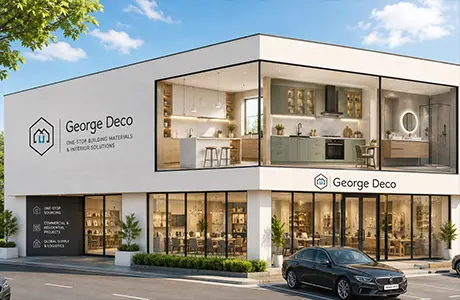
Georgedeco is one of the top-performing teams within George Group, serving clients across multiple countries.
Our leader, Roger, is a nationally recognized cross-border e-commerce ambassador who has visited hundreds of factories and understands the supply chain deeply.
We focus on clear communication, strong execution, and full responsibility throughout the project
Where in China can you buy cheaper building materials for home renovation?

Renovating a home can quickly add up, but buying building materials in China offers an opportunity to reduce costs significantly. Here’s where you can find the most affordable materials and how to make smart purchasing decisions. China is home to some of the most affordable building materials, especially in cities like Guangzhou and Yiwu. By choosing the right location and materials, you can save a considerable amount. Understanding where to source materials is crucial. Let’s take a closer look at the cities in China that are known for offering cheaper building materials, the best options available, and how to find reliable manufacturers. Which city in China sells building materials? When it comes to buying building materials, the city you choose can significantly affect the cost. Different cities specialize in various materials, and some are more affordable than others. Cities like Guangzhou, Yiwu, and Foshan are the go-to places for affordable building materials. Let’s explore why these cities stand out. Foshan Located in Guangdong Province, Foshan is considered the heart of ceramic production in China. It is home to a large number of tile and stone manufacturers, offering high-quality yet affordable products. Whether you’re looking for wall tiles, flooring, or even marble, Foshan is the place to go for cost-effective options. These cities are major manufacturing and distribution centers, meaning you can find affordable materials with ease, often in bulk, which further reduces the price. Guangzhou Guangzhou, located in southern China, is one of the largest trading hubs in the country. It’s famous for its large wholesale markets, where you can find a wide variety of building materials. From flooring and tiles to electrical components, Guangzhou offers competitive prices, especially for bulk orders. Being close to Hong Kong also makes it easier for international buyers to access materials at good prices. Yiwu Yiwu is another city renowned for its wholesale markets, but what sets Yiwu apart is its extensive variety of low-cost building materials. This city’s markets cater to a global audience, providing everything from basic construction supplies to decorative elements for home renovation. Yiwu is particularly appealing for small businesses or those looking to purchase materials in smaller quantities. What is the cheapest building material right now? While the cost of building materials can fluctuate, some materials remain consistently cheaper than others, making them popular choices for home renovations. Cement, tiles, plywood, and steel are among the cheapest building materials right now, offering good value for money without compromising quality. Cement Cement is one of the most cost-effective building materials in China. It’s used in almost every construction project, from foundations to structural reinforcements. Because of its widespread use and availability, it remains one of the least expensive materials, especially when bought in bulk. Tiles Basic ceramic tiles, particularly those produced in Foshan, are inexpensive but durable. These tiles come in a wide variety of designs and are suitable for kitchens, bathrooms, and living spaces. For homeowners looking for budget-friendly options, ceramic and porcelain tiles offer great value without compromising on quality. Plywood and MDF Wood-based materials like plywood and Medium Density Fiberboard (MDF) are also affordable choices. They are commonly used for interior finishes, such as furniture, cabinetry, and wall paneling. China produces a variety of plywood grades, so even the more basic options can be quite affordable. Steel Steel is an essential material for structural components, such as beams, columns, and reinforcements. While prices vary, steel remains relatively cheap compared to other high-end materials, especially when purchased directly from manufacturers. These materials are easily available and inexpensive due to the scale of manufacturing in China, making them ideal for both residential and commercial projects. How to find cheap manufacturers in China? Finding affordable manufacturers in China can be challenging, but with the right approach, you can connect with reliable suppliers that offer competitive prices. Platforms like Alibaba, attending trade fairs, and using local agents are some of the best ways to find cheap manufacturers. Alibaba and Online Marketplaces Alibaba is one of the largest platforms for connecting with suppliers in China. It’s a great resource for bulk buyers looking for a wide range of materials. You can filter by price, material quality, and shipping options, and directly communicate with manufacturers to negotiate prices. For international buyers, Alibaba also offers integrated shipping services, making it easier to handle logistics. Trade Shows Attending trade shows in China, such as the Canton Fair in Guangzhou or the China International Decoration & Decoration Fair in Foshan, can help you find affordable manufacturers. These events allow you to meet suppliers face-to-face, examine the quality of materials, and discuss terms directly, often leading to better deals. Sourcing Agents If you’re unfamiliar with China’s markets or don’t have the time to visit, hiring a sourcing agent can help. These agents have established relationships with manufacturers and know where to find the best deals. They can also assist with negotiations and ensure that you’re getting the best value for your purchase. By leveraging these methods, you can find reliable and affordable suppliers, saving both time and money. What is the average construction cost in China? Understanding the average construction costs in China is essential for budgeting a home renovation project. Prices vary depending on the region, material choice, and complexity of the project. Construction costs in China typically range from $40 to $100 per square meter, depending on the location and materials used. Basic Residential Construction For a basic residential project, you can expect to pay around $40 to $60 per square meter. This includes standard materials and labor costs in most areas of China, especially in smaller cities or rural regions. The price is lower in places like Chengdu or Xi’an. Mid-Range Construction If you want higher-quality finishes, such as better flooring, kitchen cabinets, or bathroom fixtures, the cost can range from $60 to $80 per square meter. This is typical for most urban areas where there’s a demand for higher standards but not necessarily luxury materials. High-End Construction For luxury construction projects that